
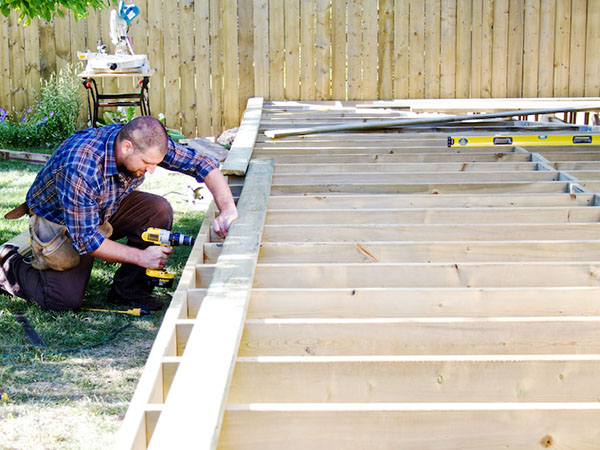
A deck is one of the few home improvements that adds usable space and increases resale value at the same time. But not every deck does that equally well. The decisions made during planning and construction determine whether a deck becomes a genuine asset or just a feature that buyers look past. At CD Beiler Construction, we work with homeowners across Pennsylvania as experienced deck builders who think through those decisions from the start. Call us at 717-747-4037 to talk about what your project could look like.
Baldwin sits in a part of Allegheny County where outdoor living space carries real weight in the housing market. Homes with well-built decks consistently generate more buyer interest than comparable homes without them. The gap between a deck that adds value and one that does not usually come down to a handful of specific choices.
Deck Builders Add Real Home Value
A deck adds value when it functions as a natural extension of the home, not as an afterthought bolted to the back. That means the layout should connect to the interior logically, the materials should match or complement the home’s exterior, and the structure should be built to last without constant upkeep. Buyers notice when those things line up, and appraisers do too.
The decks that fall flat with buyers are usually the ones built for the lowest upfront cost. Pressure-treated lumber that has gone gray and splintery, railings that wobble, stairs that feel steep or awkward. These are not just cosmetic issues. They signal deferred maintenance and raise questions about what else may have been cut short during construction.
How Deck Builders Choose Materials That Hold Value

Material choice is where the long-term value of a deck gets decided. Composite decking costs more upfront than pressure-treated wood, but it does not gray out, splinter, or require annual sealing. In Pennsylvania, where decks go through hard freeze-thaw cycles every winter and humid summers every year, composite holds up significantly better over time.
Aluminum and stainless cable railing systems are another upgrade that pays off. They stay clean, do not rust, and keep sightlines open in a way that traditional wood or vinyl railing does not. A deck built with quality composite decking and a low-maintenance railing system looks as good in year ten as it did at installation. That is exactly what buyers and appraisers respond to.
The Design Decisions That Drive Buyer Interest
Functionality matters more than size. A deck with built-in seating along one edge, a defined area for a grill, and a clear flow from the back door feels considered. It reads as livable space. A large flat platform with no features reads as unfinished potential, even if it costs more to build.
Lighting is the detail most homeowners skip and most regret. Low-voltage deck lighting along stairs, under railing caps, or built into post tops extends how the space gets used into the evening and makes the deck visible and appealing from inside the home year-round. It is a modest addition during construction and a real differentiator when the home eventually goes on the market.
What Deck Builders Know About Size vs. Return
Bigger is not always better when it comes to deck value. A large deck that dominates the yard leaves no room for landscaping and requires significant upkeep that can work against resale. The sweet spot in most Baldwin neighborhoods is a deck sized to serve the household’s actual use: large enough for outdoor dining and seating, proportionate to the home’s footprint and yard.
Here is what experienced deck builders’ factor into the sizing conversation:
- How the deck connects to interior living areas, specifically the kitchen and main living room
- The ratio of deck to remaining yard space, since buyers want outdoor living and green space
- Whether a single-level or multi-level layout makes more sense for the grade of the yard
- Local permit requirements and setback rules that affect what can actually be built.
Work With Deck Builders Who Plan for Value
The difference between a deck that adds value and one that does not is decided in the planning phase. At CD Beiler Construction, our deck builders work with Baldwin, PA homeowners to get the materials, layout, size, and features right from day one. Call us at 717-747-4037 to schedule a free consultation.
FAQ
Do deck builders in Pennsylvania need permits to build a deck?
Yes, most decks in Pennsylvania require a building permit. Requirements vary by municipality, and a qualified contractor handles the permit process as part of the project.
Does a deck increase home value in Pennsylvania?
Yes, a well-built deck consistently adds resale value, particularly in markets like Allegheny County where outdoor living space is a strong buyer priority.
How long does composite decking last compared to wood?
Quality composite decking typically lasts 25 to 30 years with minimal maintenance, compared to 10 to 15 years for pressure-treated wood in Pennsylvania’s climate.
What size deck adds the most value to a home?
A deck proportionate to the home and yard, typically 300 to 500 square feet, tends to return to more value than an oversized platform that consumes the yard.