
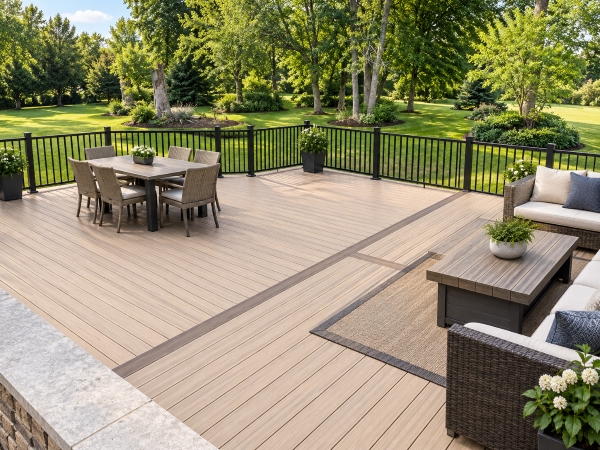
Choosing between composite and wood decking is one of the biggest material decisions in a Lancaster, PA deck project. Both can work well, but they differ in maintenance, appearance, heat, repair options, framing requirements, and initial cost. The better choice depends on how you want to use the deck and how much upkeep you want to take on over time.
CD Beiler Construction builds decks and railings for Lancaster-area homeowners. Its current Decks and Railings service page includes both pressure-treated lumber and composite decking among the available material choices.
Composite Decking Reduces Routine Surface Maintenance
Composite decking is manufactured to resist several problems associated with exposed wood surfaces, including splintering and moisture-related deterioration. It generally does not need the recurring staining or sealing that traditional wood decking may require.
That does not make composite maintenance-free. Periodic cleaning is still important, and the exact care instructions depend on the product installed. Homeowners should ask what cleaning methods are recommended and what substances or tools should be avoided.
Wood Offers a Different Look and Maintenance Trade-Off

Wood decking appeals to homeowners who prefer a natural material and the ability to change its appearance with stain or finish. Pressure-treated lumber can also have a lower initial material cost than many composite products, although actual project pricing depends on the deck design, framing, railing, stairs, labor, and selected materials.
Wood typically requires more ongoing surface care. Cleaning, staining, sealing, and replacement of weathered boards may become part of ownership over time, depending on the species, exposure, finish, and maintenance history.
Compare Long-Term Ownership, Not Just the First Quote
A composite bid may be higher at the beginning, but homeowners should avoid assuming that one material will always be cheaper over the life of the deck. Maintenance habits, product choice, repairs, refinishing, and how long you expect to own the home all affect the comparison.
A useful contractor proposal should identify the decking product or material type, framing assumptions, railing scope, stairs, trim, fasteners, and any maintenance expectations. That makes it easier to compare complete projects instead of comparing only the price of the deck boards.
Color, Texture, and Surface Temperature Matter
Composite decking comes in a wide range of colors and textures, while wood can be stained or allowed to weather naturally. Samples are useful because catalog photos do not show exactly how a material will look next to your siding, trim, landscaping, or outdoor furniture.
Darker deck surfaces can also become warmer in direct sun. Ask to see physical samples and discuss how color and exposure may affect comfort before selecting a final product.
Framing Has to Match the Selected Decking
Decking material affects more than the visible surface. Joist spacing, fastening methods, stair details, picture-frame borders, and other installation requirements can vary by product and layout.
CD Beiler Construction’s Lancaster Deck Builder article explains why the structure beneath the deck matters and notes that joist spacing should follow the requirements of the decking material being installed.
Can Composite Go Over an Existing Deck Frame?
Sometimes, but the existing structure should be evaluated first. A contractor should inspect the footings, ledger attachment, beams, joists, fasteners, rot or deterioration, and joist spacing before recommending reuse.
Replacing only the surface does not correct hidden framing problems. If the existing frame is not sound or does not meet the requirements of the selected decking product, repair or reconstruction may be needed before new boards are installed.
Think About Repairability and Future Changes
Individual wood boards can often be replaced and refinished, although matching an older stain or weathered appearance can be difficult. Composite boards can also be replaced, but matching a discontinued color or an older weathered product may be a consideration.
If you expect to add stairs, railings, a pergola, lighting, or other features later, mention those plans during design so the framing and layout can account for them where appropriate.
Composite Deck Builder in Lancaster, PA
For Lancaster homeowners, choosing composite over wood should come down to priorities rather than a blanket claim that one material is better. Composite can reduce recurring surface maintenance, while wood offers a natural appearance and different cost and repair trade-offs.
CD Beiler Construction has more than a decade of construction experience in the region and builds custom decks and railings. Call (717) 747-4037 to discuss material options for your Lancaster deck project.
Frequently Asked Questions
Is composite decking worth the higher upfront cost?
It can be for homeowners who value lower routine surface maintenance, but the right comparison depends on the selected products, project scope, maintenance expectations, and how long you plan to use the deck.
Does composite decking fade or change color?
Products vary. Ask about the specific product’s appearance, care requirements, and what color change or weathering the manufacturer says to expect.
Can composite decking be installed on an existing deck frame?
Sometimes. The existing footings, ledger, beams, joists, fasteners, condition, and spacing should be inspected before the frame is approved for reuse.