
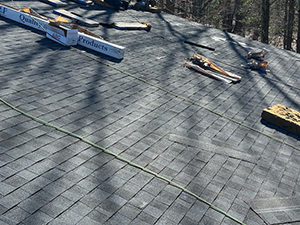
Shingle roofing remains a practical option for many Oxford, Pennsylvania homes, but choosing a roof should involve more than color and a general lifespan estimate. Product documentation, installation requirements, attic ventilation, and ongoing maintenance all affect how a shingle roof performs. CD Beiler Construction provides residential shingle roofing services and can be reached at (717) 747-4037.
Key Considerations for Shingle Roofing
Compare Documented Product Performance
Not all shingles are tested or rated the same way. Asphalt shingles are available in different constructions, profiles, colors, and performance classifications, so homeowners should compare the documentation for the specific product being proposed rather than assuming one style is automatically stronger.

Useful items to review include:
- Wind-resistance testing. Asphalt shingles may be evaluated under recognized laboratory standards such as ASTM D3161 or ASTM D7158. These classifications help compare products, but they are not a promise that a roof will withstand a particular real-world storm because field performance also depends on installation, roof geometry, exposure, and other conditions.
- Impact-resistance documentation. Some products are tested to standards such as UL 2218. If impact performance matters to you, ask for the specific classification and product documentation rather than relying on a broad hail-resistant label.
- Appearance and compatibility. Color, profile, roof slope, flashing details, and the existing roof assembly should all be considered as part of the overall project.
Installation Requirements Matter
The installation stage affects whether the roof can perform as intended. Deck condition, underlayment, flashing, starter materials, fastener placement, and manufacturer instructions all matter. Wind classifications are based on tested assemblies and specified installation methods, so the proposal should identify the product being installed and the requirements the contractor intends to follow.
Details around valleys, walls, chimneys, vents, and roof edges also deserve careful attention because these transitions are common places for water entry when they are poorly detailed or later damaged.
Before signing a proposal, ask for the product name, applicable technical data, installation instructions, and written warranty information that will govern the work. Those records make it easier to confirm what was installed and how later repairs should be handled. They can also help a future contractor avoid mixing incompatible materials or relying on assumptions about fasteners, ventilation, or prior work.
Ventilation Is Part of the Roof System
A shingle roof works together with the attic and roof assembly below it. Balanced intake and exhaust ventilation can help manage heat and moisture in the attic, while insulation and air sealing also influence indoor comfort and moisture movement. Ventilation needs depend on the roof design, applicable code, and the shingle system being installed.
Instead of assuming any ridge vent is sufficient, ask how the ventilation plan was sized and whether it follows the product installation instructions and applicable warranty terms. Keep those documents with your roofing records so future maintenance does not depend on memory.
Plan Maintenance Around the Actual Roof
Roof maintenance should reflect the home, surrounding trees, drainage, roof age, and previous storm exposure. Homeowners can safely watch from the ground for missing or displaced shingles, overflowing gutters, debris buildup, interior stains, or other changes after severe weather. Roof-level inspection and repair should be handled by a qualified roofing professional.
Seasonal attention can help identify minor problems before they spread. For a broader look at preventive care, see CD Beiler Construction’s residential roof maintenance guidance. When damage is localized, its shingle repair guidance also explains why prompt assessment can matter.
Avoid Universal Lifespan Promises
No single service-life number applies to every shingle roof. Product type, installation quality, ventilation, sun and weather exposure, roof slope, maintenance, and storm damage can all influence how long the roof remains serviceable. A warranty term is also not the same thing as a guaranteed roof lifespan.
For that reason, it is more useful to compare the exact product documentation, installation requirements, ventilation plan, and maintenance expectations than to choose shingles based only on a decades-long estimate.
Shingle Roofing Professionals in Oxford, PA
CD Beiler Construction provides residential shingle roofing services for homeowners in Oxford, PA. A roofing proposal should give you enough information to understand what product is being installed, how its documented performance applies, what ventilation is planned, and what maintenance will be expected after the project is complete. Contact (717) 747-4037 to discuss shingle roofing for your home.
Frequently Asked Questions
How long does a shingle roof last in Oxford, Pennsylvania?
There is no universal lifespan. Service life depends on the specific shingle, installation, ventilation, roof design, exposure, maintenance, and storm history, so product documentation and current roof condition are more useful than one fixed number.
What should I ask about a shingle’s wind rating?
Ask which test standard and classification apply to the exact product and what installation method is required. A laboratory classification helps compare products, but it does not guarantee performance in every real-world wind event.
Does attic ventilation affect shingle performance?
Yes. Ventilation can help manage attic heat and moisture, but the right design depends on the roof assembly, code requirements, and the shingle manufacturer’s current installation and warranty documents.
When should shingle damage be professionally assessed?
Arrange an assessment after visible shingle loss, recurring leaks, flashing damage, storm impacts, or other meaningful changes. A roofer can determine whether the issue is localized or part of a broader roof problem.