
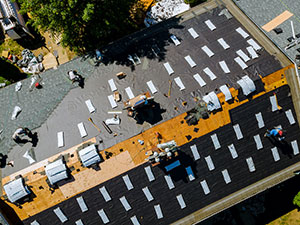
When an Ardmore homeowner compares a shingle roof replacement proposal, the most useful questions are not about broad promises of craftsmanship. The proposal should make the work understandable before installation begins. Scope, flashing, deck condition, ventilation, concealed damage, change procedures, cleanup, and written warranty terms should all be clear enough to compare with another bid. CD Beiler Construction can be reached at (717) 747-4037 to discuss a residential roofing project.
Start With the Replacement Scope
A proposal should say what is actually being removed and replaced. Homeowners should be able to tell whether the contractor is proposing a full tear-off, what existing roofing layers are included in removal, how debris will be handled, and which roof areas are part of the job.
The scope should also identify the new roof assembly rather than describing the project only as “new shingles.” That may include underlayment, flashing, ventilation components when applicable, edge details, valleys, penetrations, and other parts of the approved system. The exact materials and sequence should follow the selected roofing system and the conditions of the home.
Ask How Flashing Will Be Handled

Flashing is one of the most important parts of a replacement proposal because leaks often develop at transitions rather than in the middle of an otherwise sound shingle field. Ask what the scope includes at chimneys, sidewalls, valleys, roof-to-wall intersections, vents, skylights, and other penetrations that exist on the home.
The proposal should explain whether existing flashing will be replaced, reused, or evaluated after tear-off. Reuse should not be assumed automatically, and replacement should not be promised where the existing detail has not yet been exposed. The useful question is how the contractor will decide what is serviceable and how any change will be documented.
Understand the Deck Contingency Before Tear-Off
Some deck damage cannot be confirmed until old roofing is removed. Soft, deteriorated, or damaged sheathing can change the scope after work begins. A clear proposal should explain how the deck will be evaluated, what conditions require replacement, how added work will be priced, and who must approve the change before the crew proceeds beyond the original agreement.
This matters because a low initial bid can become difficult to compare if deck repairs are left undefined. A homeowner should know the unit price, allowance, or other pricing method that will apply if concealed damage is found.
Ventilation Should Be Evaluated for the Actual Home
Ventilation is not a one-size-fits-all feature and should not be described as automatically preventing moisture problems or extending roof life. The contractor should evaluate the existing attic and roof configuration and explain whether ventilation changes are part of the proposed scope and why.
If the proposal includes ridge vents, intake vents, or other ventilation work, ask how the recommendation fits the existing assembly. The written scope should make clear which ventilation components are included rather than leaving them as an assumption.
Compare Materials Without Relying on Savings Claims
Modern shingles are available with different features and performance characteristics, but a proposal should not promise a specific reduction in utility bills or a fixed increase in home value without project-specific evidence. The more useful comparison is whether the selected shingles and related components fit the roof design, exposure, appearance goals, and written system requirements.
Ask the contractor to identify the exact shingle product or system being proposed and to separate material coverage from contractor workmanship terms. Written warranty documents should control rather than general statements about how many years every roof will last.
Look for a Clear Change-Order Process
A replacement proposal should explain what happens when conditions differ from what was visible before tear-off. Deck damage, deteriorated flashing, unexpected layers, or another concealed condition can change the work. The contractor should document the condition, explain the added scope, and obtain the required approval before additional work proceeds.
This protects both sides by keeping the final invoice connected to approved work rather than verbal changes that are difficult to verify later.
Closeout Is Part of the Proposal
Before signing, ask what happens when the installation is complete. Closeout should address cleanup, removal of roofing debris, review of approved changes, and the project documentation promised in the agreement. If photos or other completion records are included, the proposal should say so.
Warranty documents should also be delivered according to the written agreement. Homeowners should distinguish contractor workmanship obligations from separate material or system warranty terms and review any exclusions, maintenance requirements, or registration steps that apply.
Evaluating a Shingle Roof Replacement Proposal in Ardmore
When comparing shingle roof replacement proposals, focus on details that can be checked in writing. A useful proposal explains the tear-off scope, flashing approach, deck contingency, ventilation work, change procedure, cleanup, and warranty documentation. That gives an Ardmore homeowner a stronger basis for comparing bids than general promises about quality alone.
Contact CD Beiler Construction at (717) 747-4037 to discuss the roof condition and replacement scope.
Frequently Asked Questions
What should be included in a shingle roof replacement proposal?
Look for the tear-off scope, roof areas included, flashing details, deck-repair process, ventilation work when applicable, cleanup, change procedures, and written warranty terms.
What happens if damaged decking is found after tear-off?
The contractor should document the condition, explain the added work and pricing, and obtain the required approval before proceeding beyond the agreed scope.
Should old flashing always be reused during roof replacement?
No. The contractor should evaluate the existing flashing and explain whether it is serviceable or needs replacement for the specific roof detail.
What should I receive at project closeout?
Confirm cleanup, approved change documentation, any promised completion records, and the workmanship and material warranty documents that apply to the project.