
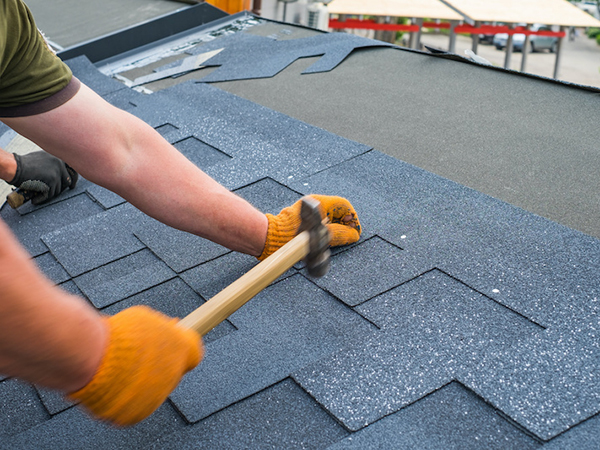
Lancaster winters do not just sit there and be cold. They freeze, thaw, and refreeze over and over, and that cycle is hard on a roof in ways that do not show up until spring. CD Beiler Construction handles roof repairs for homeowners across Lancaster, PA on shingle and metal roofs alike.
Call CD Beiler Construction at (717) 747-4037 for roof repairs in Lancaster, PA.
Roof Repairs in Freeze-Thaw Winters
Freeze-thaw is the single biggest source of winter roof damage in this region. Water gets into a small gap during a thaw, then freezes overnight and expands. Ice takes up more room than water, so every freeze pries that gap a little wider. A hairline crack in a shingle or a pinhole at a flashing joint becomes a real opening after a few dozen cycles, and Lancaster runs through that cycle many times each winter.
Metal roofs are not immune. The expansion and contraction that comes with swinging temperatures works fasteners loose and stresses seams over a long winter. By the time the weather warms up, the damage is already done, even if you cannot see it yet. That is why so many repairs get scheduled in spring for problems that actually started in January.
How Ice Forces Roof Repairs

Ice dams are a Lancaster classic, and most of them start inside the house. Heat escaping from the living space warms the roof deck, which melts the bottom of the snow layer. That meltwater runs down to the cold edge of the roof and refreezes into a ridge of ice. The ridge grows; backs water up under the shingles and pushes it into the house.
This is why an ice dam is often a ventilation problem wearing a roofing costume. You can replace every shingle on the eave and still get ice dams next winter if the attic stays warm. A good repair looks at why the dam formed, not just the water stain it left behind. Sealing the leak and improving airflow usually go hand in hand.
Roof Repairs Caused by A Storm Season
Winter is not the only threat. Pennsylvania storm season brings high winds and occasional hail, and both find the weak spots a roof already has. Wind gets under any shingle whose seal has loosened and folds it back, exposing the underlayment and nail line to the next rain. Hail bruises the surface, knocking granules loose and creating soft spots that turn into leaks down the road.
After any strong storm, a quick look from the ground is worth the few minutes. Shingles in the yard, grit in the gutters, or dented vents and flashing are all signs worth a closer inspection before the next system rolls through.
Why is Spring When Winter Damage Appears?
Here is the part that surprises people. The damage from a hard winter often does not show up until April or May, long after the cold is gone. A crack that opened in January might stay dry through the frozen months because the water is locked up as ice and snow. Then the spring rains arrive, find the opening, and the ceiling stain appears out of nowhere.
That lag fools homeowners into blaming a spring storm for a problem the winter created. A spring inspection catches the freeze-thaw damage while it is still a small repair rather than a soaked attic.
Timing Your Roof Repairs Right
The best time to handle winter damage is before winter, and the second best is the moment you spot it. Fall is ideal for getting ahead of the freeze-thaw season, while spring is when last winter’s hidden damage finally shows itself. Either way, catching it early keeps a small seasonal problem from becoming a structural one.
For roof repairs in Lancaster, PA contact CD Beiler Construction at (717) 747-4037 today.
FAQ
How does Lancaster’s winter weather affect a roof?
The freeze-thaw cycle is the main culprit. Water seeps into small gaps, freezes, and widens them a little more with each cycle until a tiny flaw becomes a leak.
What time of year is best to schedule roof repairs?
Fall is best for getting ahead of winter, and early spring is when hidden winter damage usually appears. Both beat waiting for an active leak.
How can I get my roof ready for winter?
Clear the gutters, trim overhanging branches, and have any loose shingles or worn flashing fixed before the first freeze. Good attic ventilation helps prevent ice dams.