
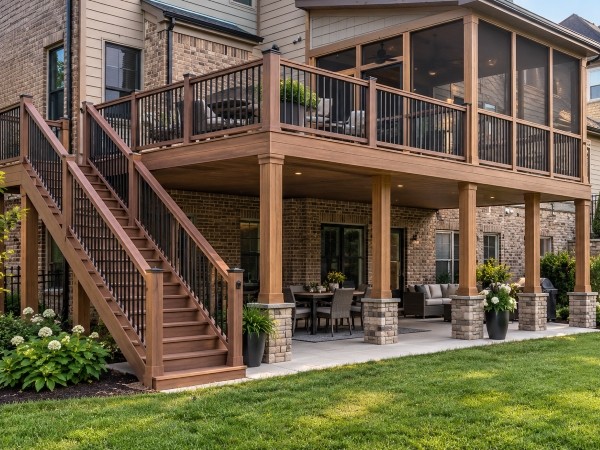
Choosing a deck builder in York, PA is easier when you compare more than the final price. A homeowner should understand how the builder approaches design, framing, materials, permits, site conditions, drainage, railings, and changes that may come up after work begins.
CD Beiler Construction builds decks and railings for homeowners in its Pennsylvania service area. Before signing a proposal, ask how the contractor will turn your goals into a written scope and how the finished deck will connect to the house and yard.
Start With the Way You Plan to Use the Deck
A deck for quiet seating may need a different layout than one designed for dining, entertaining, grilling, or frequent family gatherings. Size, stair locations, railing layout, traffic flow, and furniture placement can all change once the intended use is clear.
Ask the builder how the proposed layout responds to doors, grade, yard access, nearby structures, and the areas you want to keep open. A good plan should fit the property instead of forcing a standard deck shape onto every home.
Ask How the Deck Will Connect to the House

The connection between the deck and the home is one of the most important structural details. The builder should explain how the ledger, flashing, framing, and other connections will be handled for the specific house.
Do not rely on a vague promise that the deck will simply be attached to the wall. The proposal should be based on the actual siding, wall construction, foundation conditions, and the way water will be kept from entering around the connection.
Confirm Footings, Framing, and Structural Assumptions
Footing depth, beam size, joist spacing, post locations, and railing support depend on the deck design, material, loads, site conditions, and applicable code requirements. Those decisions should follow the project rather than a generic rule.
CD Beiler Construction’s Lancaster Deck Builder article provides related guidance on framing, ledger flashing, hardware, and the importance of matching joist spacing to the selected decking material.
Compare Decking and Railing Materials Carefully
Wood and composite decking each have different maintenance, appearance, repair, and cost trade-offs. Railing choices can also affect the project budget and the overall look of the deck.
Ask what materials are included in the quoted price, whether trim and fascia boards are included, what fasteners or hidden fastening systems are planned, and what maintenance the selected materials require. Samples can help you compare color, texture, and appearance before the order is placed.
Understand Permit and Inspection Responsibilities
Permit and inspection requirements depend on the property and final scope. Ask who will confirm the applicable requirements, prepare any needed drawings, submit permit documents, and coordinate inspections.
Do not assume every deck follows the same approval process. Height, stairs, railings, setbacks, property conditions, and the way the deck attaches to the house can all affect what documentation is required.
Ask How Site Conditions Will Be Handled
Grade, drainage, access, utilities, landscaping, and soil conditions can affect how a deck project is staged and built. Ask how materials and equipment will reach the work area, what parts of the yard need protection, and how disturbed areas will be handled after construction.
If unexpected site conditions are discovered, the contractor should explain how they will be documented, priced, and approved before the scope changes.
Compare Written Scope, Not Just Total Price
Two deck bids may not include the same work. A useful proposal should identify the deck size and layout, framing assumptions, decking, railings, stairs, trim, demolition if needed, permit responsibilities, cleanup, exclusions, and any allowances.
A lower total does not automatically mean a better value if important work is missing from the scope. Ask contractors to explain differences so you can compare substantially the same project.
Ask How Communication and Changes Are Managed
Homeowners should know who the main contact will be, how schedule changes are communicated, and what happens if a material choice or site condition changes during construction.
A written change process helps keep decisions clear. It should explain how added work is described, priced, and approved before the contractor proceeds.
Look for Relevant Deck Experience
A contractor’s general construction experience matters, but deck-specific experience is especially useful because framing, connections, railings, stairs, and outdoor exposure all affect the finished project.
CD Beiler Construction’s Deck Builders Ardmore article shows the company’s broader deck-building work and discusses material choices, design, and local-regulation considerations.
Deck Builder in York, PA
For a York homeowner, the strongest proposal is the one that clearly explains the design, structural approach, materials, permitting, site conditions, cleanup, exclusions, and change process before construction starts.
CD Beiler Construction has more than a decade of construction experience and provides deck and railing services in Pennsylvania. Call (717) 747-4037 to discuss a deck project for your York home.
Frequently Asked Questions
Do I need a permit to build a deck in York?
Requirements depend on the property and final scope. Confirm the applicable permit and inspection requirements before construction begins.
How long does a deck project take?
There is no universal timeline. Design complexity, permits, weather, access, material availability, and site conditions can all affect the schedule.
What should I compare in deck-builder proposals?
Compare the same scope for framing, decking, railings, stairs, permits, site protection, cleanup, exclusions, allowances, and how changes will be approved.